


Laser Refractive Surgery

Femtosecond or Bladeless LASIK
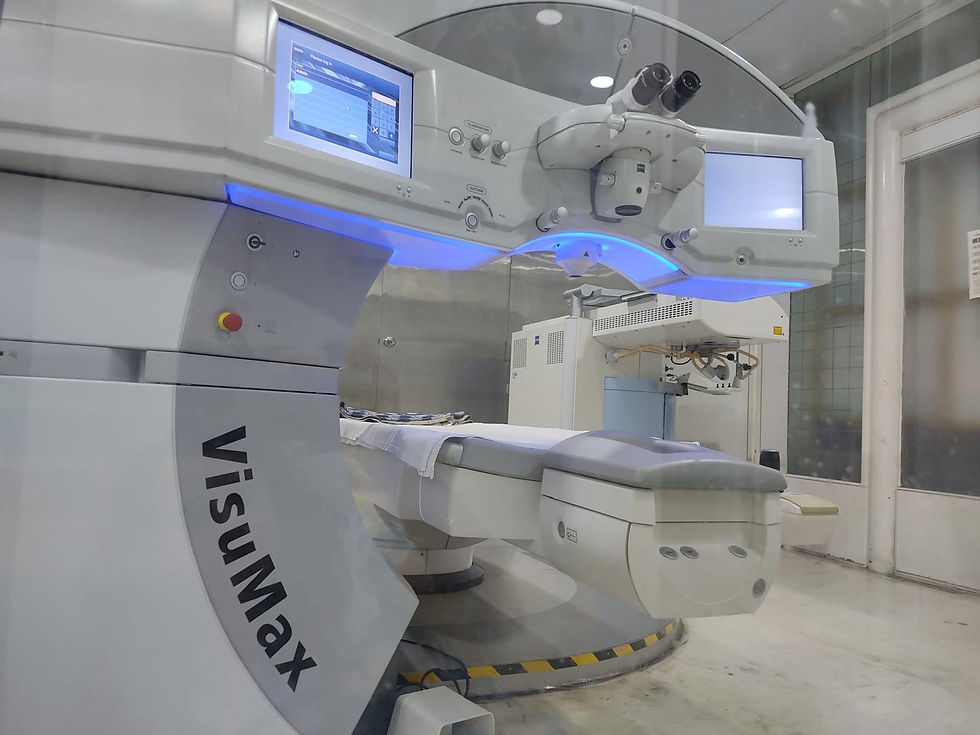
Femtosecond laser has revolutionized laser refractive surgery. It is a precise, cutting tool that can make corneal surgery accurate and safe. Two lasers are used in this procedure. It entails making a corneal flap with a femtosecond laser as a first step followed by excimer laser power correction below the flap as the next step.
It involves carving out a lenticule or disc in the middle of the cornea with a femtosecond laser and then removing this lenticule out through a laser-made keyhole incision.
How Femto Lasik Is Performed
Why Laser Eye Surgery?
Step 1

India has more than 400 laser center
Step 2

Simple Surgery performed within 10 mins
Step 3

Corrects about 90% of refractive errors
Step 4

Less Discomfort
Quick recovery time
Basics of Laser Refractive Surgery
The basic principle of laser refractive surgery is reshaping the front transparent layer of the eye called the ‘cornea’ so as to focus the rays of light on the retina to form a clear image.

There are four types of refractive errors:

Myopia/ Short sightedness
The eyeball is longer than normal and hence, rays of light focus in front of the retina. Myopic patients have a minus number and can see near clearly without glasses; however, distance is a blur. With laser refractive procedures, the cornea is flattened centrally to correct the refractive error.

Hypermetropia/Hyperopia/Long sightedenss
The eyeball is shorter than normal and hence, rays of light focus in behind the retina. Hyperopic patients have a plus number and cannot see near clearly without glasses. With laser refractive procedures, the cornea is steepened centrally to correct the refractive error.
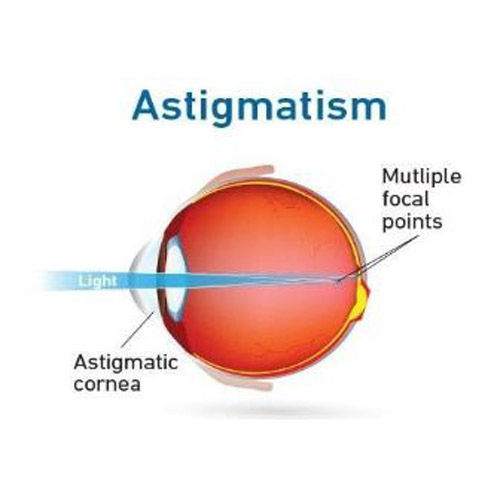
Astigmatism/Cylindrical error
This error does not relate to the length of the eyeball, but to the shape of the cornea. If the corneal shape is like an egg or baseball rather than a ball, it would result in a cylindrical error. With laser refractive procedures, the cornea is flattened on the steep axis to correct the refractive error.

Presbyopia
This is an age-related refractive error caused by weakening of the muscles in the eye that control the near focusing power of the eye. It leads to difficulty in reading small letters in the middle age-group, typically 40-55 yrs. This plus number may increase upto 55 yrs before stabilizing. Regular laser refractive procedures do not correct presbyopia. There are new custom treatments available for this condition that are slowly gaining acceptance.
Common Laser Eye Surgery Procedures

Top layer of cornea - epithelium is removed and laser done. Safe and bladeless procedure but slower recovery.
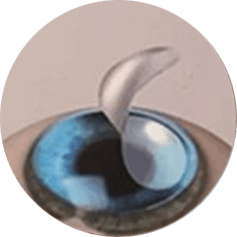
Corneal flap created with a blade and laser done below the flap. Faster recovery time but complications can occur.


Femtosecond or Bladeless LASIK
◉ Predictability of flap thickness is better with femto-flaps i.e., a 100 micron femto-flap will be 100 micron whereas there can be variations with a microkeratome flap
◉ Predictability of flap diameter is better with femto made flaps
◉ Corneal size and curvature plays an important role in success of blade flaps while femto-flaps are independent of these variables. A steep or flat cornea can pose difficulty in flap creation with microkeratome/blade.
◉ Femtosecond flap making is a safer procedure with fewer complications (buttonhole, incomplete flap) as compared to blade LASIK.
◉ Femtosecond laser makes a vertical cut at the edge of the flap as opposed to the sloping edge of the blade flap.
◉ This results in better flap alignment and healing.
◉ Complications of epithelial cells growing under the flap edge are lesser in a femto-flap.
◉ Chances of flap displacement are lesser as the flap sits better.
◉ Femto laser makes planar, uniform flaps.
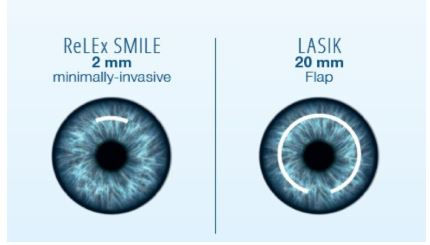
SMILE versus LASIK
◉ Flap complications like folds in the flap, displacement of the flap, buttonholes or complete cutting of the flap do not occur with SMILE
◉ The strength and structure of the cornea is preserved better with SMILE than with LASIK. The flap made in LASIK weakens the front of the cornea and cannot contribute to its strength in the future. A flapless procedure like SMILE is preferred for moderately high errors to provide better strength to the cornea in the longterm.
◉ Minimally invasive- 2 mm wound compared to 20 mm wound in LASIK. This results in more rapid recovery to routine activities
History
Time To Bust Some Myths
Laser eye surgeries have been around for three decades and have seen dramatic improvements in technology and safety. A lot of the earlier procedures like Radial Keratotomy, Arcuate Incisions are now obsolete. Laser procedures are the mainstay, however, they too have evolved from excimer laser to now the precise femtosecond laser. Flaps have now transformed to flapless keyhole surgery called ReLex SMILE.
Medilaser was one of the first few centres to offer ReLex SMILE and now has a long list of satisfied patients. Alongwith ReLex SMILE, Femtosecond or Bladeless LASIK, Blade LASIK and Surface ablation are also performed at our centre on the best Carl Zeiss (Germany) femtosecond and excimer laser platforms.
Is Painful
Procedures are long
Is only for Myopia
May cause blindness
May Burn Eyes
Long term effects are unknown
Risk for permanent eye damage
Laser Eye surgery is not affordable
Correction is temporary
These are common and gradually get better over few weeks.
Who Should Avoid Laser Eye Surgery?
How do I prepare myself or plan a laser refractive procedure?
If you are under 18 years of age
If you have uncontrolled diabetes & glaucoma
If your contact lens or glass prescription was changed the previous year
If you have abnormal wound-healing due to disease or medication
If you are pregnant or breastfeeding

These are common and gradually get better over few weeks.
Discontinue contact lenses a week before your eye test with a doctor
Carry your previous glass prescriptions along for your visit
Be clear about your expectations and motivation for the procedure
Do not wear eye makeup for the procedure
Trust your doctor’s choice of procedure for your eyes
Plan a week’s rest to care for your eyes after the procedure
Avoid swimming, beach holidays for a month after the procedure
Do's And Dont's
Before Surgery
-
Stop wearing soft lenses 1 week before surgery
-
Stop wearing rigid gas permeable lenses 2/3 weeks before surger
Do's After Surgery
-
Use eye drops clean your eyelid margins
-
Plenty of rest
-
Watch TV & read books 1 day after Consume Healthy food
Dont's After Surgery
-
Don’t expose your eyes to dust/smoke
-
Don’t keep eyes open for too long
-
Don’t swim till your doctor approves
-
No touching/ rubbing eyes
-
No strenuous activity
-
Don’t drive on the day of surgery
Pros of Femto Lasik

Bladeless

Fast Recovery

Painless

Safer and more accurate than blade lasik

Can correct wide range of refractive errors (+ and -)
