
What Are Eye Floaters and Should You Be Worried?
Have you ever noticed tiny specks, threads, or cobweb-like shapes drifting across your vision, especially when staring at a bright sky or a blank wall? These are known as eye floaters. Though usually harmless, eye floaters can sometimes indicate more serious eye conditions. In this blog, we’ll explore what floaters are, why they occur, when to worry, and what you can do about them.
What Are Eye Floaters?
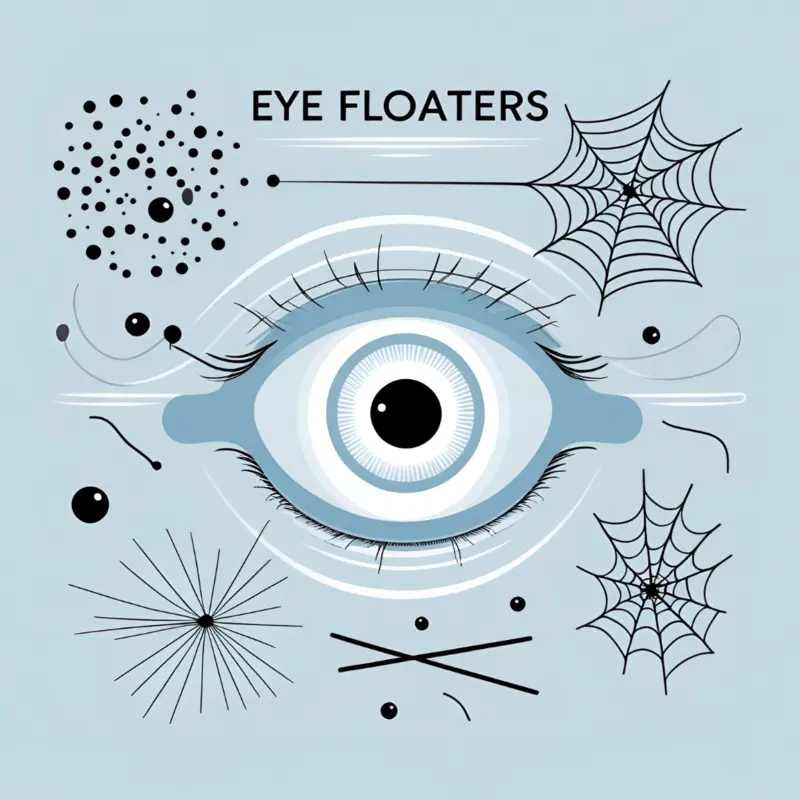
Floaters are small, shadowy shapes that appear in your field of vision. They might look like:
- Tiny dots
- Threads or strands
- Cobwebs
- Squiggly lines
These floaters drift around as your eyes move and often seem to dart away when you try to look directly at them.
Why Do Eye Floaters Occur?
The inside of your eye is filled with a clear, gel-like substance called the vitreous. As we age, this gel begins to shrink and becomes more liquid. Tiny fibers within the vitreous clump together, casting shadows on the retina, the light-sensitive tissue at the back of your eye. These shadows are what we perceive as floaters.
Common Causes of Eye Floaters:
Aging
Most floaters develop as a part of the natural aging process, especially after the age of 50.
Posterior Vitreous Detachment (PVD)
A condition where the vitreous gel pulls away from the retina. Common in older adults.
Myopia (Nearsightedness)
People with high myopia are more likely to experience floaters earlier in life.
Eye Injury or Trauma
Physical injury to the eye may result in floaters.
Inflammation (Uveitis)
Inflammation of the eye can lead to floaters due to debris in the vitreous.
Eye Surgery or Laser Procedures
Surgeries like cataract removal can sometimes
Are Eye Floaters Harmful?
In most cases, eye floaters are benign and don’t require treatment. However, a sudden increase in floaters—especially if accompanied by flashes of light or peripheral vision loss—could signal a retinal tear or detachment. This is a medical emergency that requires immediate attention.
When Should You See a Doctor?
Seek professional eye care if you experience:
- A sudden increase in the number or size of floaters
- Flashes of light in one or both eyes
- A shadow or curtain over part of your visual field
- Eye pain or discomfort
- Recent eye trauma
Diagnosis of Eye Floaters
To determine the cause of floaters, your ophthalmologist will:
- Conduct a comprehensive eye exam
- Use dilating drops to examine the retina
- Possibly optical coherence tomography (OCT) if macular disease is suspected
- Possibly use ultrasound imaging for better insights
Treatment Options for Eye Floaters
- Observation: Most floaters fade or become less noticeable over time.
- Vitrectomy: A surgical procedure where the vitreous gel (and floaters) are removed and replaced with a saline solution. This is typically reserved for very severe cases.
- Laser Vitreolysis: A laser is used to break up floaters, making them less visible. Not widely available and not suitable for all types of floaters.
Preventive Tips While floaters can’t always be prevented, you can protect your eye health by:
- Getting regular eye exams
- Managing chronic conditions like diabetes and hypertension
- Wearing protective eyewear during sports or hazardous work
- Limiting screen time and using proper lighting
Living with Eye Floaters If floaters are not a sign of a serious condition, your brain usually learns to ignore them. Practicing good eye hygiene, staying hydrated, and maintaining a healthy diet rich in antioxidants may help support overall eye health.
Myth vs Fact
- Myth: Eye floaters can be permanently removed with eye drops.
- Fact: No eye drops have been proven to eliminate floaters.
- Myth: Floaters always indicate retinal detachment.
- Fact: Most floaters are harmless and age-related.
Conclusion
Eye floaters are a common visual phenomenon that most people will experience at some point in their lives. While usually harmless, it’s crucial to monitor any sudden changes in your vision and seek medical help when needed.
Concerned About Floaters?
Visit Medilaser – Pioneers in Laser Vision Correction in India. Book your comprehensive digital eye check-up today and get expert advice tailored to your vision needs.